




TITLE: The future of non-destructive testing — From NDT 4.0 to intelligent ecosystems.
TITLE: The future of non-destructive testing: from NDT 4.0 to intelligent ecosystems
Non-destructive testing (NDT) stands at the threshold of a fundamental transformation. At a recent conference organised by ATG, Branislav Anwarzai of the Institute of Advanced Studies presented a vision of a new generation of inspection processes. The talk focused on the transition from subjective evaluation to automated, objective and predictive systems that use artificial intelligence (AI) to increase reliability and speed of inspection.
Below is an overview of the key takeaways and recommendations for implementing these technologies.
NDT 4.0: AI AS THE NEW STANDARD
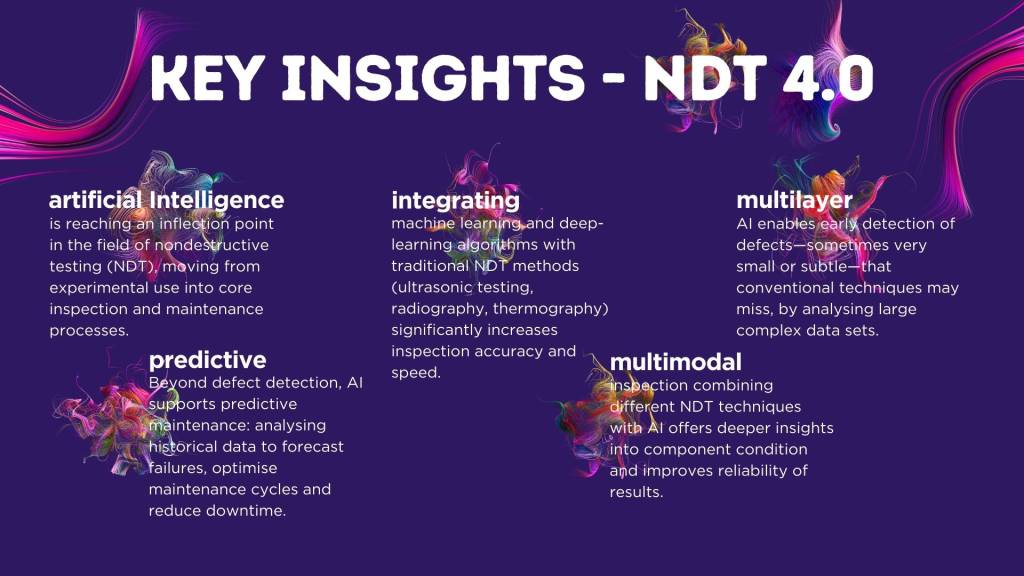
The main message is that AI in NDT is reaching an inflection point. It is no longer just experimental — it is moving into core maintenance and inspection processes.
- Predictive maintenance: AI moves NDT beyond simple defect detection. By analysing historical data it can predict failures, optimise maintenance cycles and reduce downtime.
- Multi-modal inspection: Combining traditional methods (ultrasound, radiography) with machine-learning and deep-learning algorithms substantially improves accuracy. This approach gives deeper insight into component condition than would be possible with isolated methods.
- Detection of subtle defects: AI can reveal even very small or deeply buried defects in complex materials (e.g. composites) that conventional techniques often miss.
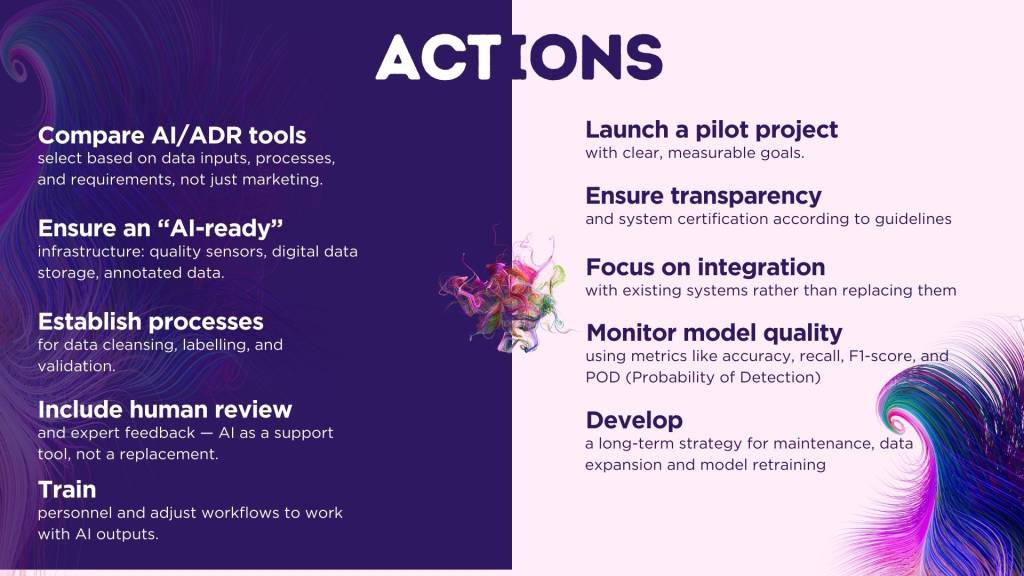
PRACTICAL STEPS FOR IMPLEMENTATION (ACTIONS)
For successful adoption of AI in practice, the talk defined a concrete action plan. The key is not just buying software, but readiness of the infrastructure.
- Infrastructure and data: Organisations must ensure quality sensors and processes for cleaning and validating data.
- Human factor: AI is not meant to replace people, but to serve as a supporting tool. Human review and expert feedback must remain in the decision loop.
- Pilot projects: Start with a pilot that has clear, measurable goals, and focus on integrating into existing systems rather than fully replacing them.
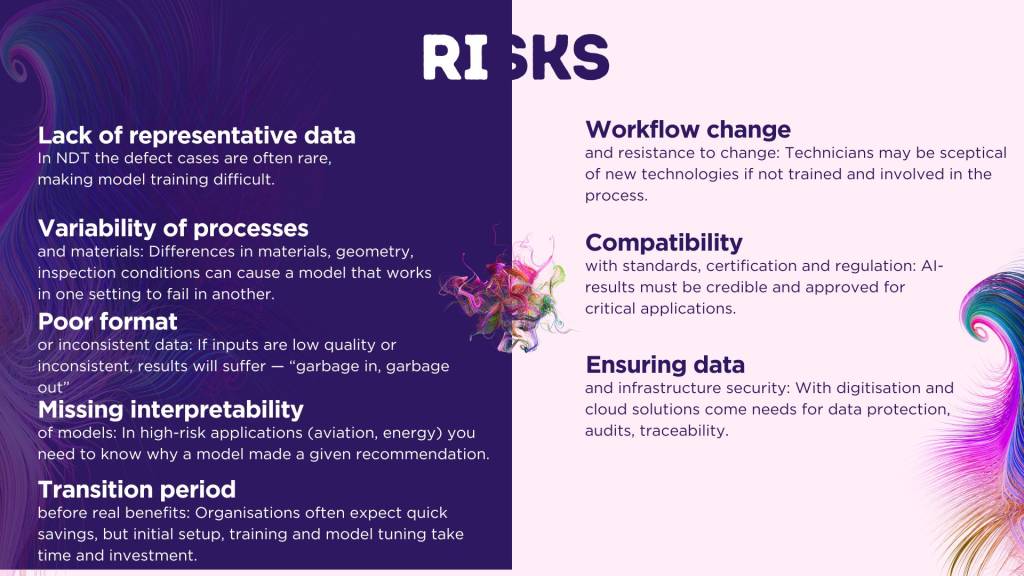
RISKS AND CHALLENGES
The talk realistically named the barriers that may slow adoption:
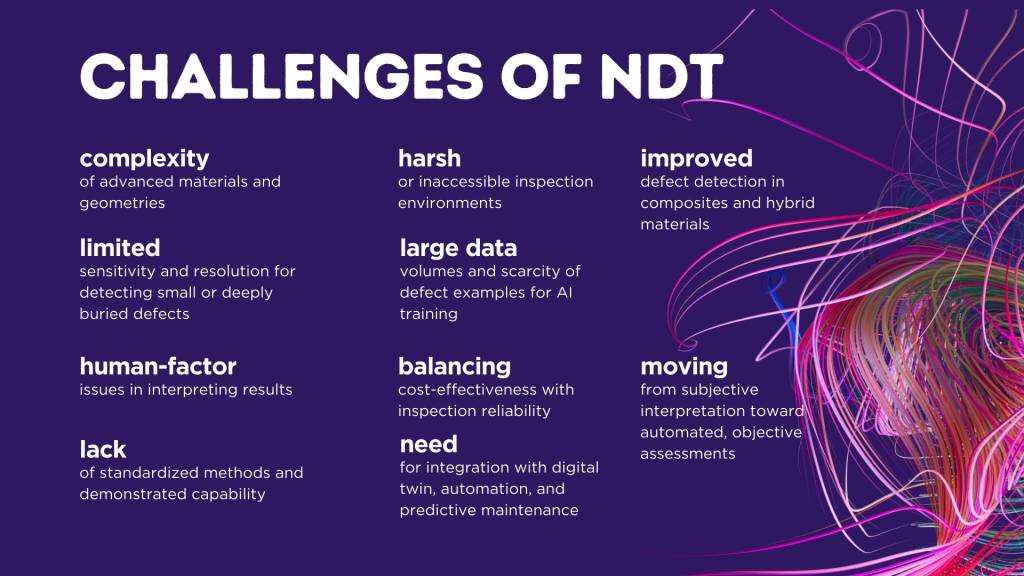
- Data quality (“Garbage in, garbage out”): If input data is poor or inconsistent, model results are unusable. A common problem is the lack of representative defect data — defects in NDT are naturally rare.
- Model interpretability: In safety-critical sectors such as aviation or energy, it is not enough for AI to “work” — operators must understand why a model reached a given conclusion.
- Process variability: A model trained in one environment may fail in another due to differences in materials or geometry.
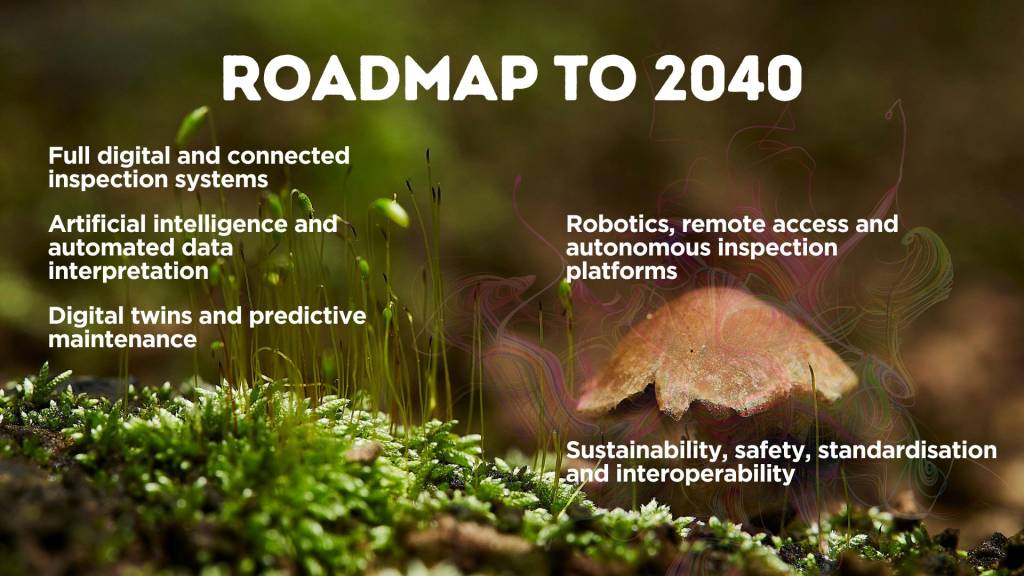
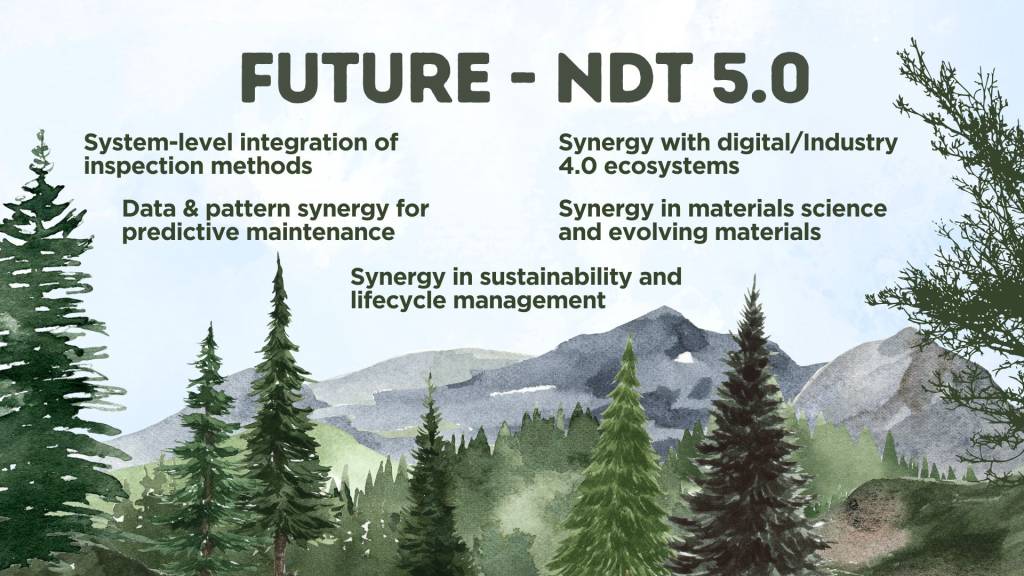
VISION OF THE FUTURE: TOWARDS 2040 AND NDT 5.0
The closing of the talk outlined a long-term roadmap. By 2040 we expect full digitalisation of inspection systems, use of digital twins, and the rise of autonomous robotic platforms.
The concept of NDT 5.0 represents a future system-level synergy: linking inspection data with Industry 4.0 ecosystems, materials science and lifecycle management with a focus on sustainability.
The slides of the talk: